For many of us, a trip to the dentist is about as fun as a root canal (no pun intended). Now imagine walking into a Brisbane dental clinic and hearing: “No drills today – just a gentle laser light.” That’s right – modern dentists are increasingly swapping out noisy drills for focused light beams.
Laser dentistry might sound like something from a sci-fi movie, but it’s very real (and very effective) right here in Brisbane. Instead of the high-pitched eeeeee of a drill, you get precise treatments with less fuss. Picture your dentist deftly reshaping gums or zapping away decay with a beam of light – many patients say it feels more like a mild warmth than a jagged jolt.
Dentist visits are still dentist visits, of course (this isn’t a Hollywood action scene!), but lasers make many procedures gentler. Fewer needles, less bleeding, and faster healing are the norm. In fact, lasers “cauterise” as they work, sterilising the area and reducing infection risk, so you won’t be spitting blood into the sink afterwards. Coming home after treatment means less swelling and quicker recovery – perfect when you’ve got a busy Brisbane schedule.
Understanding Laser Dentistry
So, what is laser dentistry? In simple terms, dentists use concentrated light beams (lasers) instead of traditional tools like scalpels or drills. These lasers can cut or vaporise tissue and kill bacteria all in one go. There are different types of dental lasers: some are great for soft tissue (gums), and others work on hard tissue (teeth). For example, a CO₂ or diode laser might precisely trim away a bit of overgrown gum, while a specialized cavity-detection laser can find early decay by sensing tiny changes in tooth fluorescence.
Lasers in dentistry serve many purposes. They can remove diseased gum tissue in gum disease treatment, gently painlessly cut a tongue-tie, or even activate whitening gel for a brighter smile. If you’ve ever heard of photobiomodulation (low-level laser therapy), that’s another use – a soothing laser can reduce inflammation and pain (great for mouth sores or TMJ discomfort).
In short, lasers are versatile: they shape, disinfect, and heal. And thanks to this tech, your dentist often needs much less anaesthetic than before – no more half-face numbness for hours! If you’re curious, Brisbane clinics around Paddington and Coorparoo now offer high-tech laser treatments. To see what it’s like firsthand, you can Visit Laser Dentist brisbane.
Benefits of Laser Dentistry
Laser dentistry comes with plenty of advantages over traditional methods. In plain Aussie terms: it’s usually quicker, cleaner, and kinder on you. Here are the big perks:
- Less Discomfort: You’ll hear no spooky drill sounds – just a soft buzzing or clicking. Lasers reduce the need for needles and cutting, so procedures often feel more like a gentle pressure or warmth than pain. Many patients say they feel “chilled out” during treatment, even with minimal anesthesia.
- Reduced Bleeding: The laser beam seals blood vessels as it cuts. Less bleeding means fewer stitches and faster recovery. No one likes blood when they floss, and lasers help avoid that.
- Faster Healing: Because lasers remove only diseased tissue and simultaneously sterilize the area, your gums and tissues heal super fast. We’re talking days instead of weeks. You can get back to enjoying coffee by the river or cuddling your kids sooner.
- Precision & Preservation: Lasers target very specific spots – it’s like using a fine artist’s brush instead of a paint roller. Healthy parts of your teeth and gums stay intact. For example, when treating a cavity, a laser can remove just the rotten tooth bit without chewing away more enamel than necessary. Same with gum contouring – the laser carves it evenly, giving smoother results.
- Less Infection Risk: The intense light sterilizes as it goes, wiping out bacteria in real time. That means a much lower chance of post-procedure infections or complications.
- Minimal Anaesthetic: Because lasers are so gentle, dentists often use little or no local anaesthetic. You won’t stagger out of the chair with half your face asleep. (Translation: no cheek or lip droop for hours.)
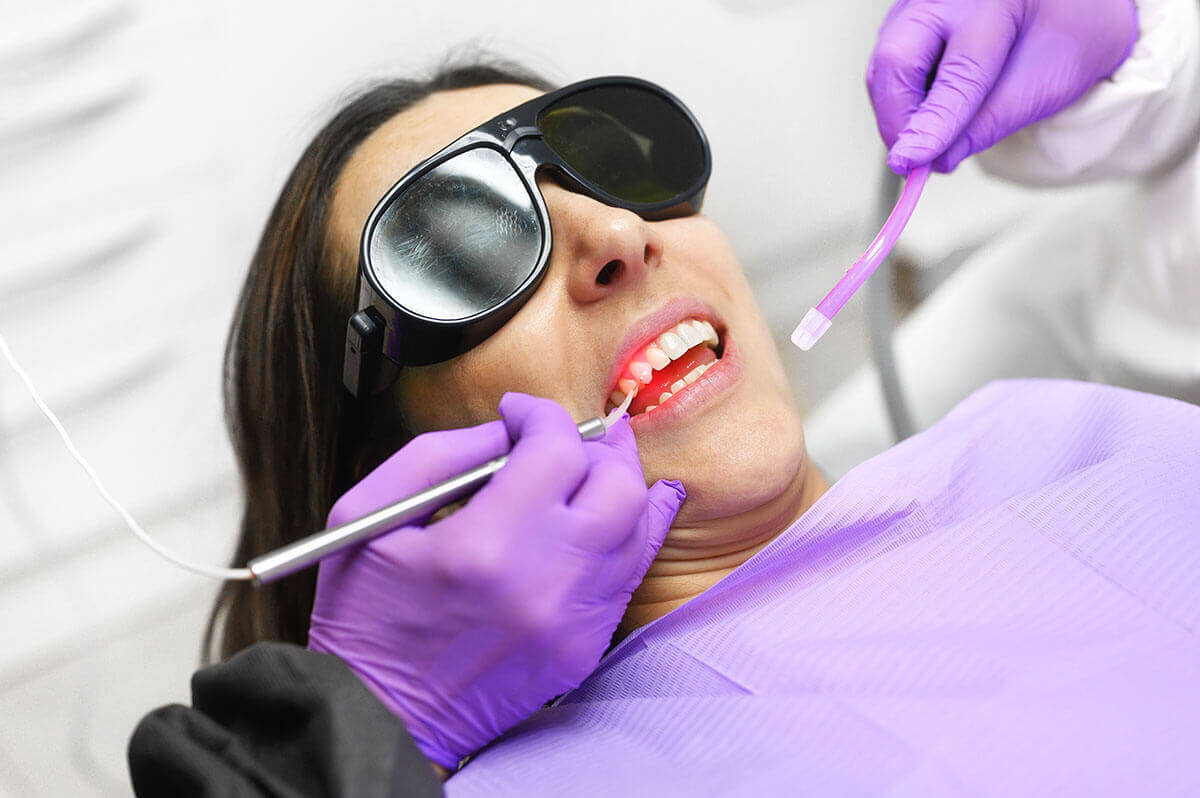
These benefits make laser dentistry especially great for anyone with dental anxiety or a busy calendar. Many Brisbane professionals appreciate how quickly they can pop in for treatment and bounce back. (And yes, it’s still totally safe – dentists follow strict laser-safety protocols, just like keeping goggles on you and themselves.)
Laser Dental Procedures & What to Expect
Thinking “sounds cool, but what actually happens?” Let’s walk through a typical laser dental visit. First off, expect to wear protective goggles – lasers are bright! Your dentist will talk you through the plan, and in most cases the whole experience feels very routine. The laser tool itself looks like a sleek wand or pen. In fact, it’s not uncommon for patients to joke, “I half-expected fireworks in here!”
When treating cavities or decay, the dentist might use a specialized cavity-detection laser first. This low-energy laser can spot tiny cavities by scanning your teeth – no bite wings needed. If decay is found, a higher-powered laser tip can gently remove the rotten part. You might feel a gentle tapping or warming sensation on your tooth, but no high-speed vibrations. After that, the dentist will place the filling. Often, lasers prep the cavity and then a standard composite filling completes the job.
For gum issues or a gummy smile, the dentist uses a different laser setting. The laser “snips” and contours the gums with amazing accuracy. You’ll hear a slight zip sound and smell a mild burnt smell (like singed hair or steak); that’s normal. The laser instantly seals small blood vessels, so there’s almost no bleeding. Many patients are amazed: one moment their gums look uneven, and the next they see smooth, even gum lines with barely a trace of blood. Recovery is quick. You might experience only minor soreness the next day – usually just a similar sensation to a mild sunburn on your gum.
If you need a root canal, lasers can help too. After cleaning out the nerve, a laser is used inside the root canal to sterilize those tiny nooks and crannies that drills and files can’t reach. Patients often report nearly painless root canals when lasers are involved, and they heal faster.
Even cosmetic work uses lasers. Want whiter teeth? Your dentist might apply a bleaching gel and then shine a laser over your teeth to speed up the process. It typically takes one quick ~60-minute session, and you’ll walk out with a brighter smile. Feeling tongue-tied? A quick laser frenectomy can fix that in minutes, and your speech or feeding issues improve almost overnight.
In terms of comfort, most people say laser treatments feel gentle. Yes, you might still get a tiny numbing injection for bigger procedures, but even that is often less required. Think of it as high-tech “no drama dentistry.”
Laser Dentistry Costs in Australia
Great tech often comes with a cost, and laser dentistry is no exception – the gear is pricey. But how pricey? In Australia, dental fees aren’t regulated by Medicare like GP fees are. Every clinic sets its own prices, so the only way to know is to ask around. As the government health portal Healthdirect explains, “there are no standard fees for dentists”. That means you could get quotes ranging significantly between clinics.
Rough ballpark: simple laser treatments might only add a modest fee. For example, one Brisbane clinic levies about a $100 “laser fee” on top of your treatment. Other dentists charge by the area treated. Laser gum therapy often runs about $500–$550 per quadrant (that’s a quarter of your mouth), so a full-mouth gum laser treatment could be around $2,000–$2,200. These are average guides – if your case is complex, expect more. (Rarely, very extensive laser work – think whole jaw reconstructions – could cost upwards of $10,000, but that’s exceptional.)
If lasers mean less drilling and fewer visits, some patients feel the extra cost is worth it. Private health insurance often treats laser procedures as it would any dental surgery: you might get some rebate if it’s deemed necessary. But don’t count on big Medicare help – most of this is out-of-pocket.
The trick is to shop around. Many Brisbane dentists offer a free consult; you can ask for a laser option and see the quote. Some practices offer payment plans too. At the end of the day, consider it like investing in a faster, more comfortable recovery and a high-tech smile makeover. After all, you’re paying for a kind of surgical precision that traditional tools simply can’t match (and a much lower chance of those dreaded follow-up dramas).
Is Laser Dentistry Right for You?
Laser dentistry sounds great, but is it a cure-all? Mostly, it’s fantastic, but there are a few caveats. For instance, lasers cannot work on metal. If you have old silver (amalgam) fillings or gold crowns, lasers won’t remove those – those still need drills or special removal tools. Large cavities under metal or intricate bridge work usually require traditional methods.
Also, while lasers treat many conditions, your dentist might still use drills for certain tasks like polishing a filling or adjusting bite after a procedure. So if a dentist offers both options, you can often choose: “Laser or no laser.” It’s your call. Most people happily opt in once they feel how gentle it is.
In terms of safety, lasers are extremely safe when used by a trained pro. Dentists follow strict rules – they and you wear special eye protection, and the lasers have precise settings so they only target intended areas. The Australian Dental Association actually emphasises that dentists must follow a laser safety program, so rest assured these tools are well-regulated.
If you’ve got complex health issues (like severe immune disorders or some medications), check with your dentist whether a laser is suitable. But generally, if you’re a normal adult or teen without those specific problems, lasers can be an excellent choice. Children can benefit too – for example, laser frenectomies or removing baby teeth usually go smoothly. The best move is an initial chat: discuss your concerns with a laser-trained dentist, and they’ll advise what’s ideal for you.
Conclusion
Laser dentistry is no gimmick – it’s a proven, high-tech upgrade to many dental procedures. In Brisbane today, it means less pain, less downtime, and often a healthier outcome than traditional methods. Whether it’s treating gum disease, zapping cavities, speeding up whitening, or anything in between, lasers can do it with precision that leaves you feeling like a VIP (minus the price tag of celebrity smiles!).
So, if you’re over the drill or simply curious about the latest in dental care, give laser dentistry a go. Chat with your local dentist about whether they offer it. Who knows – your next check-up might just feel futuristic instead of fearful. Ready to experience it yourself? Reach out to a Brisbane laser-trained dentist and light up your smile today!
Frequently Asked Questions
What is laser dentistry?
Laser dentistry uses focused light energy instead of traditional drills or scalpels for certain dental treatments. It can treat tooth decay, reshape gums, reduce bacteria, and assist with teeth whitening. The approach is precise, minimally invasive, and often more comfortable for patients.
What are the benefits of laser dentistry?
Laser dentistry can reduce pain, bleeding, swelling, and the need for stitches in many procedures. It also helps sterilise the treatment area by eliminating bacteria on contact. Most patients enjoy faster healing times and a more comfortable dental experience.
How much does laser dentistry cost in Brisbane?
The cost depends on the procedure and the dental clinic you choose. Simple treatments may only involve a small additional fee, while more advanced laser gum therapies can cost significantly more. It’s best to request a personalised quote and check whether your private health fund covers part of the treatment.
What should I expect during a laser dental treatment?
Laser dental treatments are usually quick, gentle, and less intimidating than traditional procedures. You may wear protective glasses while the dentist uses the laser to perform the treatment with minimal discomfort. Recovery is often faster, with less swelling and sensitivity compared to conventional methods.
 27Jul
27Jul
 24Jul
24Jul
 22Jul
22Jul