7 Signs Your Smile Is Ageing Too Fast
Ever catch a glimpse of your reflection and think, “Crikey, who’s that old grouch grinning back at me?” Trust me, it’s not just skin that...

Ever wake up with a stiff jaw or a throbbing headache and wonder what went on in your sleep? You might be grinding your teeth. Bruxism – the fancy term for teeth grinding or jaw clenching – is surprisingly common.
In fact, about half of us grind now and then, and roughly 5% do it regularly. If your partner’s ears perk up at a nighttime grind or you’ve noticed chips and cracks in your teeth, you’re not alone.
The big question is: Are those night guards for teeth grinding actually worth the cash and fuss? Let’s chew over the facts, Aussie style, and figure out if a custom-fitted plastic guard is your ticket to peaceful, pain-free mornings.
Bruxism is the involuntary clinch, grind and gnash of your molars, usually during sleep. You might not even know you’re doing it – until you wake up with a sore face or a chipped tooth as proof. It’s often a sneak attack of stress and anxiety. (Ever crunched down on your pencil when nervous? Same deal, but nocturnal.)
Health experts note triggers like stress, caffeine, alcohol, smoking and even some medications can rev you up to grind in your sleep. A chronic snorer might also be a grinder: Healthdirect warns that people with sleep bruxism often have other sleep issues like sleep apnoea.
So yeah, if you’re a busy Brisbane professional juggling work pressures, late-night coffees and a side of Netflix stress, your jaw might just be throwing a quiet tantrum at night.
In short, Teeth grinding is mostly an unconscious reaction. Stress and lifestyle factors often stir up the problem. Even kids can do it (luckily most grow out of it). The key point? It is common – you’re not some freak of nature if you clench your jaw while asleep. But it can lead to serious wear and tear.
So, why worry about a bit of night-time tooth grinding? Because it can turn into a sneaky demolition derby for your mouth. The enamel on your teeth is the hardest stuff in your body, but it has its limits.
Chronic grinding can erode enamel, crack teeth or fillings, and even loosen them over time. Ouch! Imagine your teeth as a set of valuable crystal vases – each grind chips a little off. Soon you’re at risk of needing crowns, root canals or other big dental work just to repair the battle damage.
Even if your teeth look OK, you might notice other clues. Healthdirect lists morning jaw pain, earaches, headaches, jaw clicks and even TMJ joint stiffness among common grinding symptoms. You might also be waking up feeling groggy or find your partner complaining about the grinding soundtrack each night. The worst part? Often you don’t feel anything until the damage is done. As the better health channels warn, leaving bruxism untreated can mean broken crowns, cracked fillings and persistent facial pain later on.
That’s why dentists love nipping this in the bud. Regular check-ups (preventive dental care) can catch early signs of bruxism – like enamel wearing thin – before you end up in a crisis. Actually, dentists call a mouth guard that shields your teeth a form of “preventive care.”
By the way, staying on top of your oral health (brushing, flossing, cutting down on fizzy drinks, etc.) helps your teeth survive any grinding you might be doing at night. A solid preventive dental care routine and chat with your dentist can ensure tiny chips don’t become major headaches (literally!).
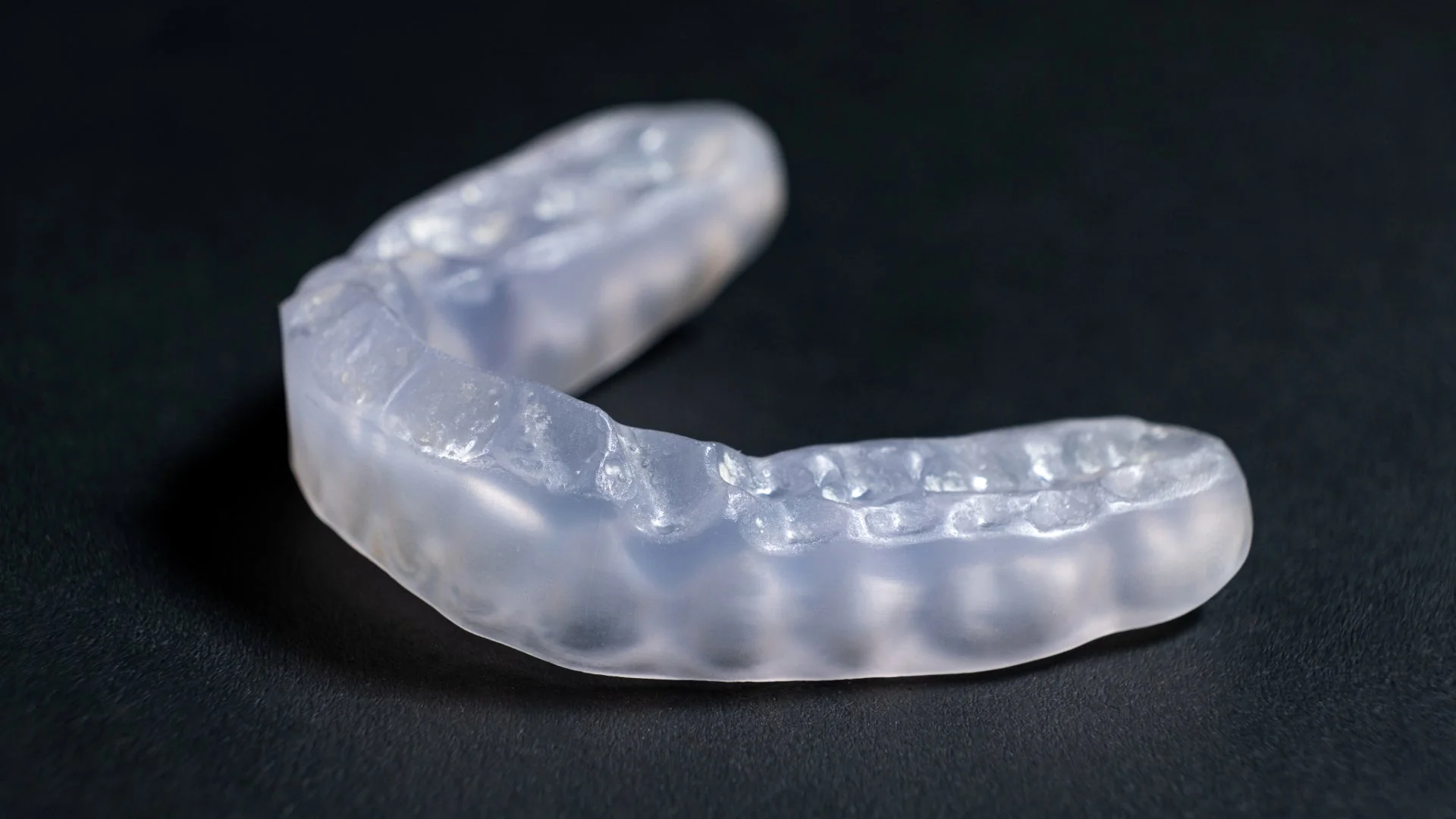
Night guards – also called occlusal splints or bite guards – are custom-fit plastic or acrylic mouthpieces worn over your teeth at night. Picture them as crash helmets for your molars. Instead of letting your upper and lower teeth slam together each time you gnash, the guard absorbs and spreads out the force.
Healthdirect explicitly recommends these mouthguards (splints) to protect your teeth when you have bruxism. In plain terms, the guard doesn’t stop you from clenching, but it creates a barrier so your teeth don’t directly grind on each other.
Not all guards are created equal. There are basically two categories:
Here’s a quick cheat-sheet table of the typical guard types you might find:
| Night Guard Type | Material | Lifespan | Price (AUD) | Best For |
|---|---|---|---|---|
| Custom Soft Guard | Flexible polymer | ~6–12 months | \$400–\$700 (dentist)\; or \$199 (online) | Mild grinders, first-timers (comfortable to wear) |
| Custom Dual Laminate | Soft inside, hard outside | ~1–2 years | \$500–\$850 (dentist)\; or \$199 (online) | Moderate grinders (balance of comfort and durability) |
| Custom Hard Guard | Rigid acrylic | ~2–3+ years | \$500–\$900 (dentist)\; or \$199 (online) | Heavy grinders (maximum protection) |
| Boil-and-Bite (OTC) | Thermoplastic (DIY mold) | A few months | ~\$20–\$60 | Mild, occasional grinders (short-term use) |
| Stock (One-size) | Molded plastic | <1 month | ~\$10–\$30 | Only in a pinch – often too loose or bulky |
Most Aussie dentists will tell you the fit is king. A custom guard will snugly cover your biting surface so it stays put and spreads the force evenly. Cheap guards often move or are so thick you feel like you’re wearing a scuba mouthpiece – one more reason to wake up drooling or kick it off in your sleep. As one tooth expert noted, ill-fitting guards can even increase jaw strain because they push teeth unevenly.
Let’s tackle the big question head-on: Is wearing a night guard worth it? The answer is: It depends. The upside is pretty clear – they protect your teeth and jaw. The downside is the usual suspects: cost, comfort, and they’re not a magic cure.
Here’s a quick list to sum it up:
So, are they worth it for you? If you’ve got mild, occasional grinding with no pain, maybe try lifestyle fixes first (mindfulness, a warm compress on your jaw, cutting late caffeine, etc.).
But if you’ve started spotting cracks, feeling permanent morning fatigue, or have heavy-duty bruxism – many dentists will tell you a night guard is a worthy investment. In fact, one Aussie dentist blog notes, “For many patients a custom night guard can be worth it when grinding is causing damage, discomfort or repeated dental problems.”.
Living in Brisbane (or anywhere in Australia), you’ve got choices for how to get a night guard:
Unlike a mobile phone or coffee habit, you can’t shop around for quality too much – fit is personal. Ask local Brisbane dental practices for quotes. The Higher Dental school clinics may even offer cheaper custom guards by students under supervision. The bottom line: cheaper is tempting, but if you grind hard, it might not save you much in the long run.
One thing’s sure – the cheaper guards are no match for a custom job. As one industry site noted, OTC guards “don’t distribute grinding forces evenly… often make you chew or clench more,” whereas a dentist-made guard does the job properly.
In other words, a bargain guard might just become nightware. Your wallet might hate it, but your teeth will thank you for getting at least a decent fit if you need serious protection.
Night guards are great, but they’re just one piece of the puzzle. The ultimate goal is to reduce or manage grinding, not just cover it up. Here are a few other pointers:
Think of a night guard as a backup plan, not the only plan. In practice, many people use a mix: a splint at night plus stress therapy, plus better sleep habits. That combo is far more “worth it” than relying on a hard bite plate alone.
At the end of the day, yes, night guards are generally worth it if you actually need one. They won’t magically cure your stress or make you stop grinding, but they do a solid job of protecting your smile from the nightly gnashing. Think of it as a wise investment in your dental future – similar to wearing a seatbelt in a car. You hope you don’t need it, but if a fender-bender comes (or in this case, a grinding rampage), you’re glad it’s there.
In Brisbane, tooth wear and broken fillings are headaches nobody needs more of. If you’re experiencing symptoms of bruxism – morning jaw soreness, chipped teeth, or if your partner nags about nighttime grinding noises – it’s definitely worth talking to a dentist.
As Australia’s Healthdirect advises, see your dentist if you suspect teeth grinding. They can check if a guard is right for you (and suggest other treatments). A well-made night guard, paired with some stress management, could mean waking up pain-free with your natural teeth intact.
Don’t wait for serious damage. If you think you might grind your teeth, reach out to a Brisbane dental professional. Early intervention means your next visit is for a check-up, not a full mouth reconstruction. Take care of those pearly whites – after all, you only get one set of adult teeth.
Ready to give your teeth a break? Book a dental consultation to see if a night guard should be your new bedtime routine. Or chat with us in the comments about your own teeth grinding tales – sharing is caring, and helping each other out is how we all keep those smiles in top shape!
Schedule a preventive check-up with your dentist today, and protect your smile tonight!
Q: Will wearing a night guard stop me from grinding my teeth?
A: Unfortunately, no. A night guard won’t fix the habit itself, it just protects your teeth from the effects of grinding. You’ll still grind or clench, but the guard takes the brunt so your enamel and jaws stay safer.
Q: How often do I need to replace my night guard?
A: Depends on the type and how hard you grind. Soft guards might need replacing every 6–12 months, while hard acrylic ones can last 2–3 years or more with good care. If it starts feeling loose, shows holes or cracks, or isn’t fitting like it used to, it’s time for a new one.
Q: Can I just use a sports mouthguard instead of a night guard?
A: Not really. Sports mouthguards are thicker and softer, made to absorb impact. They aren’t designed for constant night-time grinding and may actually encourage more clenching. They won’t distribute forces properly and can be uncomfortable for sleep. It’s better to use a guard specifically made for bruxism.
Q: Do over-the-counter boil-and-bite guards actually work?
A: They can offer some short-term relief for mild clenchers on a budget. A boil-and-bite guard is better than nothing, but they rarely fit perfectly. Think of them as a trial: if your grinding is serious, you’ll likely find a custom guard much more comfortable and effective in the long run.
 24Jul
24Jul
 22Jul
22Jul
 17Jul
17Jul
Nearly invisible, removable aligners, 3D-scanned and planned in-house by our Paddington dentist. Book a free consult and we'll tell you if Spark suits your teeth and give you an exact quote.
Simple cases only. Final price depends on treatment complexity; clinical assessment required.